
Your agency may already have clients asking one important question:
“Can you help us rank higher on Google?”
For local businesses, this question usually means they want more visibility on Google Maps, more phone calls, more website visits, more direction requests, and more qualified leads from people searching nearby.
The opportunity is huge.
Local businesses need SEO. They need Google Business Profile optimization. They need citations, service pages, location pages, reviews, content, and ongoing local ranking improvements.
But for agencies, delivering local SEO is not always easy.
Hiring an in-house SEO team takes time. Training people is expensive. Managing deliverables can become stressful. And if you do not already have proven local SEO systems, it can be difficult to deliver consistent results at scale.
This is why many agencies use white label local SEO.
White label local SEO allows your agency to offer professional local SEO services under your own brand, while an experienced backend SEO team handles the actual fulfillment.
Your client sees your agency as the service provider, such as Grow Biz Locally. Your white label partner works behind the scenes.
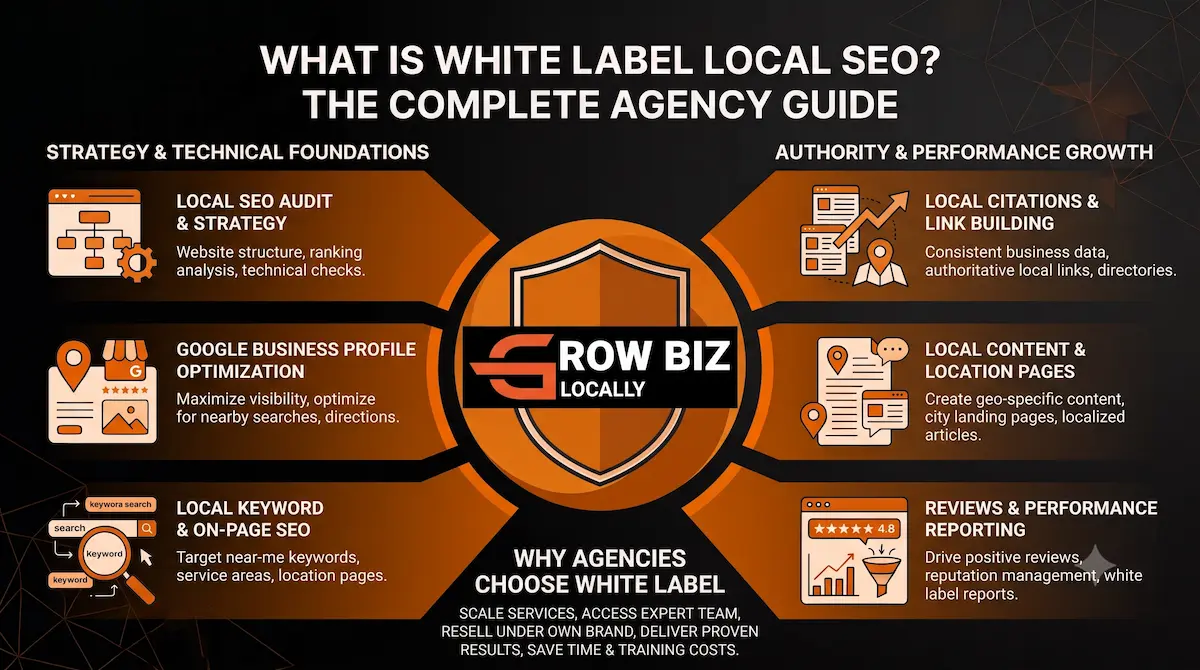
This guide explains what white label local SEO is, how it works, what services are included, why agencies use it, and how to choose the right fulfillment partner.
What Is White Label Local SEO?
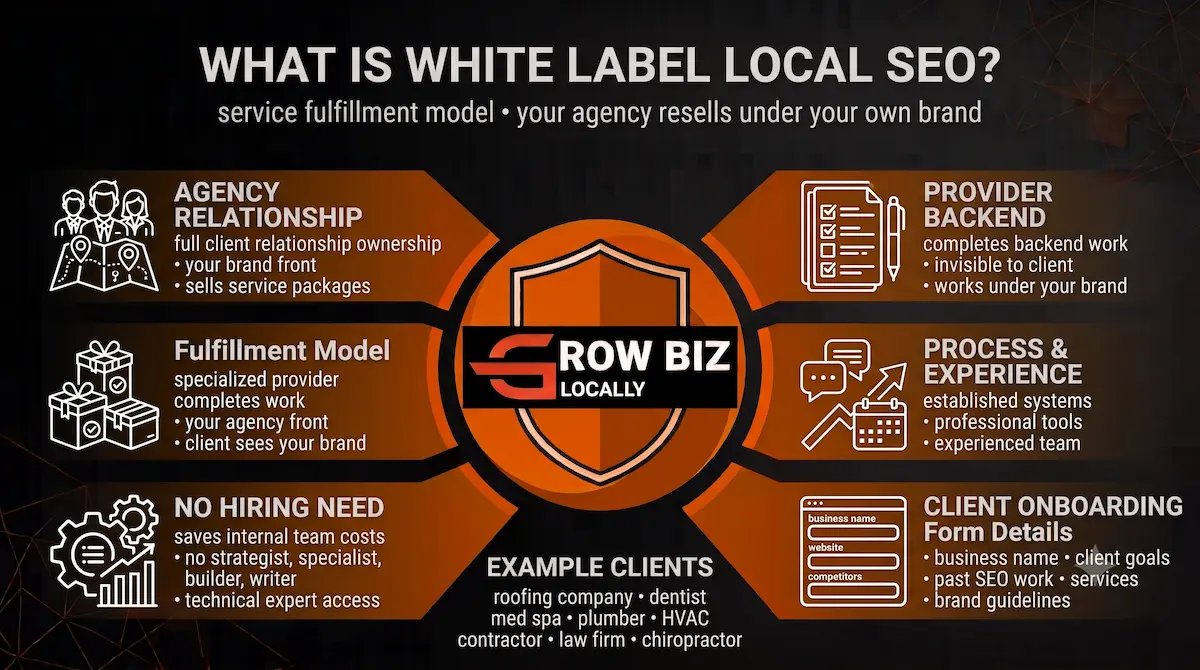
White label local SEO is a service fulfillment model where a specialized local SEO provider completes SEO work for your clients, while your agency resells the service under your own brand.
Your agency owns the client relationship. The white label provider handles the backend work.
This means your agency can sell local SEO services without hiring a full-time SEO strategist, Google Business Profile specialist, citation builder, content writer, technical SEO expert, and reporting manager.
Instead, you partner with a team that already has the process, tools, and experience to deliver the work.
For example, your agency may sell a monthly local SEO package to a roofing company, dentist, med spa, plumber, HVAC contractor, law firm, or chiropractor. Your agency communicates with the client and manages the relationship. The white label SEO provider completes the SEO tasks behind the scenes and prepares reports under your brand.
To the client, everything comes from your agency.
That is the power of white label local SEO.
Why White Label Local SEO Is Valuable for Agencies
Many agencies are excellent at web design, branding, paid ads, social media, or client acquisition. But local SEO requires a different skill set.
Local SEO is not just about adding keywords to a page.
It involves Google Business Profile optimization, local ranking signals, citation consistency, service area targeting, review strategy, location pages, local content, map tracking, technical SEO, and monthly performance reporting.
Trying to manage all of this without a proper system can quickly become overwhelming.
White label local SEO helps agencies solve this problem.
Instead of turning away SEO opportunities, your agency can offer a complete local SEO service immediately. You can increase revenue, create recurring monthly retainers, and keep clients inside your ecosystem.
If your agency already builds websites for local businesses, white label local SEO is a natural upsell.
A website gives the client an online presence. Local SEO helps that website and Google Business Profile get found by people who are ready to call, book, or buy.
How White Label Local SEO Works
The white label model has a simple structure.
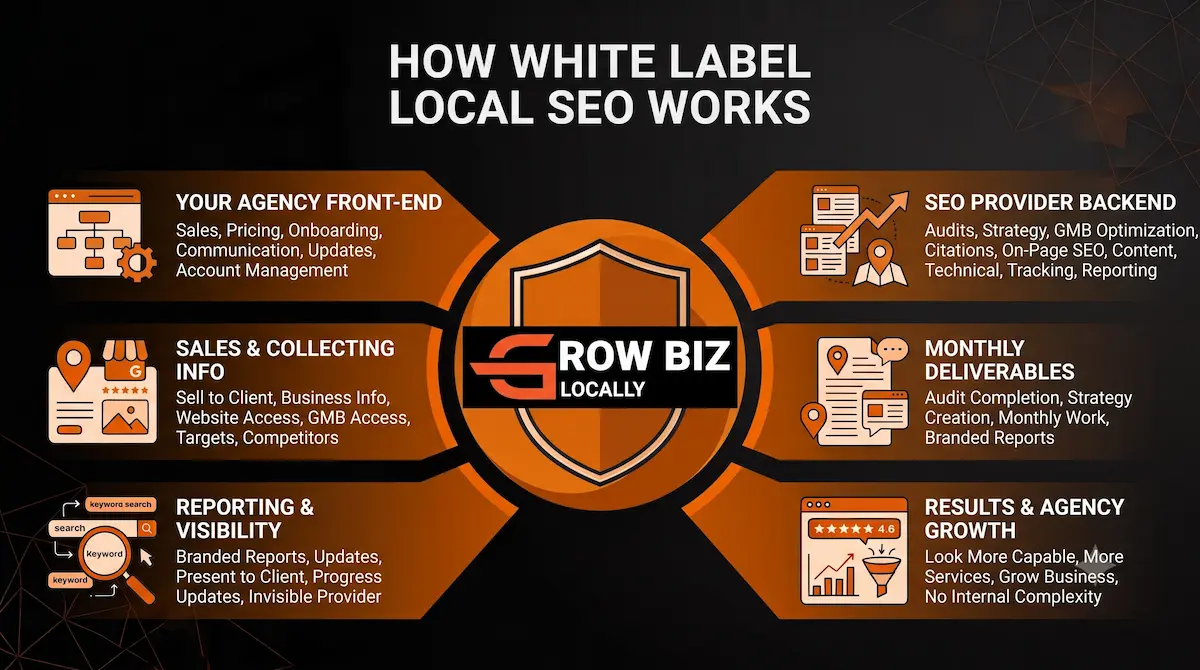
Your agency handles the front-end relationship.
This includes sales, pricing, onboarding, client communication, monthly updates, and account management.
The white label provider handles the backend SEO fulfillment.
This includes audits, strategy, Google Business Profile optimization, citation work, on-page SEO, content recommendations, technical SEO support, tracking, and reporting.
Here is how the process usually works:
- Your agency sells local SEO to the client.
- You collect the client’s business information, website access, Google Business Profile access, target services, target locations, and competitors.
- The white label provider completes the audit and creates the strategy.
- The provider works on monthly deliverables.
- Your agency receives branded reports and updates.
- You present the progress to the client under your own brand.
The provider stays invisible unless you want them involved.
This allows your agency to look more capable, deliver more services, and grow without adding internal complexity.
What Services Are Included in White Label Local SEO?
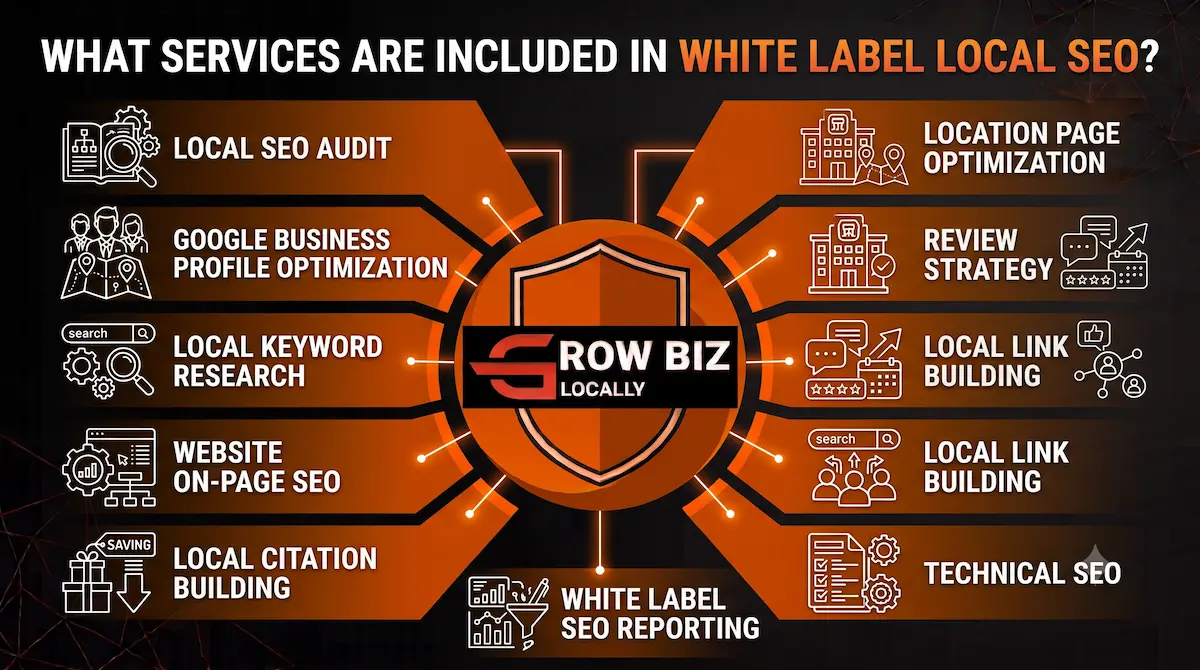
A strong white label local SEO campaign usually includes several core services. The exact deliverables depend on the client’s niche, competition, location, and budget.
However, most complete local SEO campaigns include the following.
1. Local SEO Audit
Every successful campaign starts with understanding the current situation.
A local SEO audit reviews the client’s website, Google Business Profile, local rankings, competitors, citations, content, backlinks, technical issues, and overall search visibility.
A proper audit helps identify what is holding the business back and where the fastest opportunities are.
This may include reviewing:
- Google Business Profile optimization
- Primary and secondary GBP categories
- Service area setup
- Website structure
- Title tags and meta descriptions
- Service pages
- Location pages
- Local keyword rankings
- Google Maps ranking grids
- Citation consistency
- Duplicate listings
- Review profile
- Competitor rankings
- Technical SEO issues
- Internal linking
- Schema markup
- Content gaps
The audit becomes the roadmap for the campaign.
2. Google Business Profile Optimization
Google Business Profile is one of the most important assets for local businesses.
When people search for services near them, Google often shows the Map Pack before traditional organic results. A well-optimized Google Business Profile can help a business get more calls, direction requests, website visits, and appointment bookings.
White label local SEO providers usually optimize GBP elements such as:
- Primary category
- Secondary categories
- Business description
- Services
- Products
- Business hours
- Service areas
- Photos
- Logo and cover image
- Appointment links
- Website links
- UTM tracking
- Attributes
- Opening date
- Review response strategy
- GBP posts
For local businesses, GBP optimization is not optional. It is one of the foundations of local search visibility.
3. Local Keyword Research
Local keyword research identifies the search terms customers use when looking for services in a specific city, town, or service area.
For example:
“roof repair near me” “dentist in Austin” “emergency plumber Chicago” “HVAC repair Phoenix” “personal injury lawyer Dallas” “med spa Miami” “chiropractor near me”
Good keyword research helps determine which services to prioritize, which pages to optimize, and which locations need dedicated content.
A white label SEO team can research keywords based on search volume, competition, user intent, service value, and local ranking opportunity.
This gives your agency a clear strategy to present to the client.
4. Website On-Page SEO
The client’s website plays a major role in local SEO.
Even if the Google Business Profile is optimized, the website needs to support the business’s services, locations, and authority.
White label local SEO providers may optimize:
- Homepage content
- Service pages
- Location pages
- Title tags
- Meta descriptions
- H1 and H2 headings
- Internal links
- Image alt text
- URL structure
- Calls to action
- Schema markup
- Content structure
- Local keyword placement
For example, if a roofing company serves multiple cities, the website may need individual service area pages targeting those locations.
If a med spa offers Botox, fillers, laser hair removal, and microneedling, each service may need its own optimized service page.
On-page SEO helps search engines understand what the business offers and where it operates.
5. Local Citation Building
Local citations are mentions of a business’s Name, Address, and Phone number across the web.
This is often called NAP consistency.
Citations may appear on directories, maps, social platforms, review sites, local business listings, and niche industry websites.
Examples include:
- Apple Maps
- Bing Places
- Yelp
- Foursquare
- MapQuest
- Yellow Pages
- Better Business Bureau
- Chamber of Commerce sites
- Industry directories
A white label local SEO provider may build new citations, fix incorrect listings, remove duplicates, and make sure business information is consistent.
Citation building helps create trust and supports local search visibility.
6. Local Content Creation
Content helps local businesses rank for more keywords and build topical authority.
White label local SEO content may include service pages, location pages, blog posts, FAQs, and supporting articles.
Examples include:
- How Much Does Roof Repair Cost in Dallas?
- Emergency Plumbing Problems Homeowners Should Not Ignore
- Best Time to Replace Your HVAC System in Phoenix
- What to Expect During Your First Chiropractic Visit
- How to Choose a Med Spa in Miami
- Kitchen Remodeling Ideas for Homes in San Diego
The goal is not to publish generic content. The goal is to create useful, localized content that answers real customer questions and supports local rankings.
Strong content can also support internal linking, service relevance, and conversion.
7. Location Page Optimization
Location pages are important for businesses serving multiple cities or operating from multiple physical locations.
A location page helps the business rank for searches in a specific area.
A strong location page may include:
- City-specific title tag
- Localized H1 heading
- Unique local content
- Service details
- Nearby landmarks
- Customer testimonials
- Local FAQs
- Embedded map
- Driving directions
- Internal links
- Clear calls to action
- LocalBusiness schema
Many businesses make the mistake of copying the same content across every city page. This creates thin, duplicate content.
A good white label provider creates unique and useful pages that are actually helpful for users and search engines.
8. Review Strategy
Reviews are critical for local businesses.
Potential customers compare businesses based on rating, review count, review quality, and recent customer feedback.
A strong review strategy can improve trust, conversion rates, and local SEO performance.
White label providers may help with:
- Review request templates
- Review response templates
- Competitor review analysis
- Review monitoring
- Review growth recommendations
- Sentiment analysis
- Negative review response guidance
The goal is to help the business consistently collect honest reviews from real customers and respond professionally.
9. Local Link Building
Local backlinks help increase authority and local relevance.
A local backlink may come from a chamber of commerce, local news site, sponsorship page, community organization, local blog, vendor partner, or industry association.
White label local SEO providers may identify and build local link opportunities based on the client’s industry and location.
Examples include:
- Local sponsorship links
- Guest posts on local sites
- Local directory links
- Community event links
- Industry association links
- Vendor and partner links
- Local resource page links
Local link building is often more difficult than citation building, but it can help improve authority and rankings when done properly.
10. Technical SEO
Technical SEO ensures the client’s website can be crawled, indexed, and understood by search engines.
A white label provider may identify issues such as:
- Broken links
- Redirect chains
- Slow page speed
- Indexing problems
- Missing title tags
- Duplicate meta descriptions
- Poor mobile experience
- Sitemap errors
- Robots.txt issues
- Schema errors
- Duplicate content
- Thin content
- Core Web Vitals issues
Technical SEO is especially important after a website redesign, migration, or major content update.
11. White Label SEO Reporting
Reporting is one of the most important parts of the service.
Your clients need to understand what work was completed and how the campaign is progressing.
A strong white label report may include:
- Keyword ranking movement
- Google Maps ranking changes
- Google Business Profile calls
- Website clicks from GBP
- Direction requests
- Organic traffic
- Form submissions
- Completed deliverables
- Citation progress
- Content updates
- Technical fixes
- Competitor comparison
- Next month’s action plan
The best reports are simple, clear, and client-friendly.
Most local business owners do not want complicated SEO jargon. They want to know whether visibility, calls, traffic, and leads are improving.
Benefits of White Label Local SEO for Your Agency
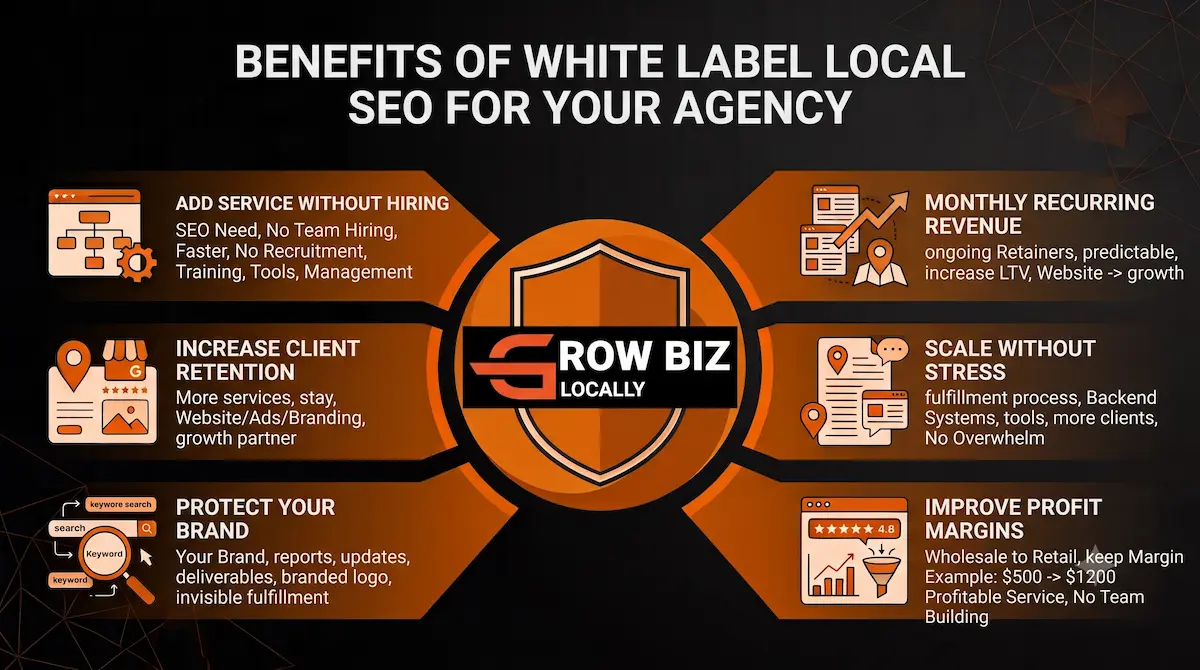
White label local SEO gives your agency several important advantages.
1. Add a High-Demand Service Without Hiring
Your clients already need SEO.
With a white label partner, you can offer local SEO without hiring a full internal team.
This allows you to move faster and avoid the cost of recruitment, training, tools, and management.
2. Create Monthly Recurring Revenue
Web design projects are often one-time payments.
Local SEO creates ongoing monthly retainers.
This helps your agency build predictable revenue and increase the lifetime value of each client.
Instead of only building a website and ending the project, you can continue helping the client grow through monthly SEO.
3. Increase Client Retention
When your agency offers more services, clients have more reasons to stay.
If you already manage a client’s website, ads, or branding, adding local SEO makes your agency more valuable.
You become a growth partner, not just a vendor.
4. Scale Without Operational Stress
SEO fulfillment requires systems, tools, and people.
A white label partner already has the backend process in place.
This allows your agency to take on more clients without overwhelming your team.
5. Protect Your Brand
A true white label provider works under your brand.
Reports, updates, and deliverables can be branded with your agency’s name and logo.
This helps you maintain a professional image while keeping fulfillment invisible.
6. Improve Profit Margins
White label local SEO allows you to buy fulfillment at wholesale pricing and resell it at retail pricing.
For example, if your provider charges your agency $500 per month and you sell the package for $1,200 per month, your agency keeps the margin.
This creates a profitable service line without building a large internal team.
White Label Local SEO vs Hiring In-House
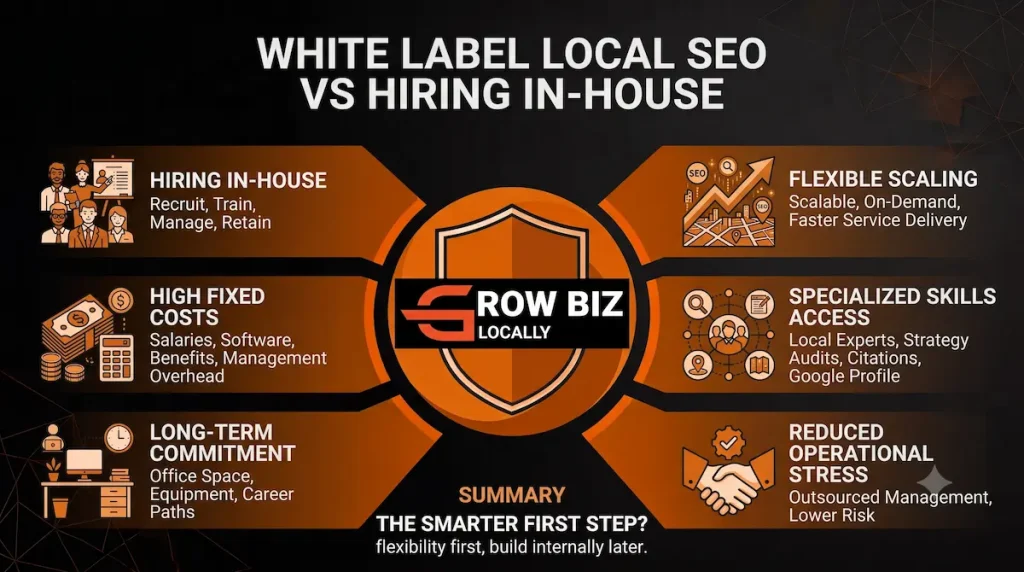
Hiring in-house gives you more direct control, but it also brings more responsibility.
You need to recruit, train, manage, and retain employees. You also need to pay salaries, software costs, benefits, and management overhead.
White label local SEO gives you flexibility.
You can scale up or down based on client demand. You can offer services quickly. You can avoid long-term hiring commitments. You can access specialized skills without building every role internally.
For many growing agencies, white label fulfillment is the smarter first step.
Once your SEO revenue becomes large enough, you can decide whether to build an internal team later.
How Agencies Make Money With White Label Local SEO
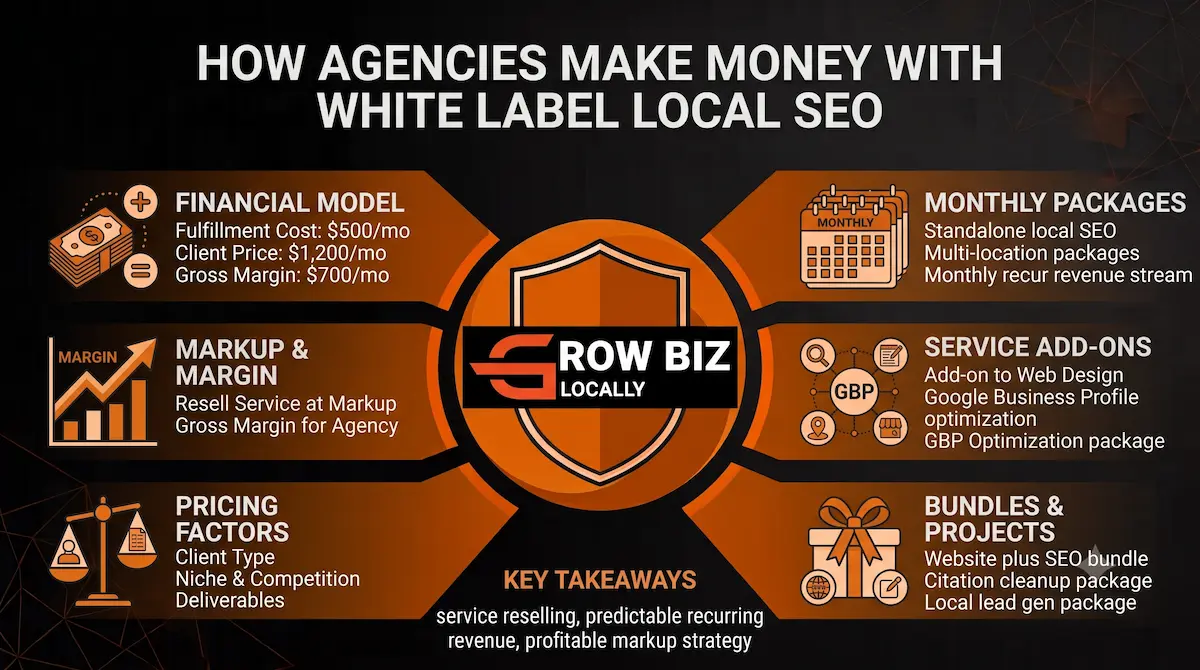
Agencies make money by reselling the service at a markup.
For example:
- Your white label fulfillment cost: $500/month
- Your client price: $1,200/month
- Your gross margin: $700/month
The exact pricing depends on your client type, niche, competition, and deliverables.
Local SEO can be sold as:
- A standalone monthly package
- An add-on to website design
- A Google Business Profile optimization package
- A citation cleanup package
- A website plus SEO bundle
- A multi-location SEO package
- A local lead generation package
For agencies serving local businesses, this can become a strong recurring revenue stream. Also read this White Label Local SEO Pricing guide.
How to Choose the Right White Label Local SEO Partner
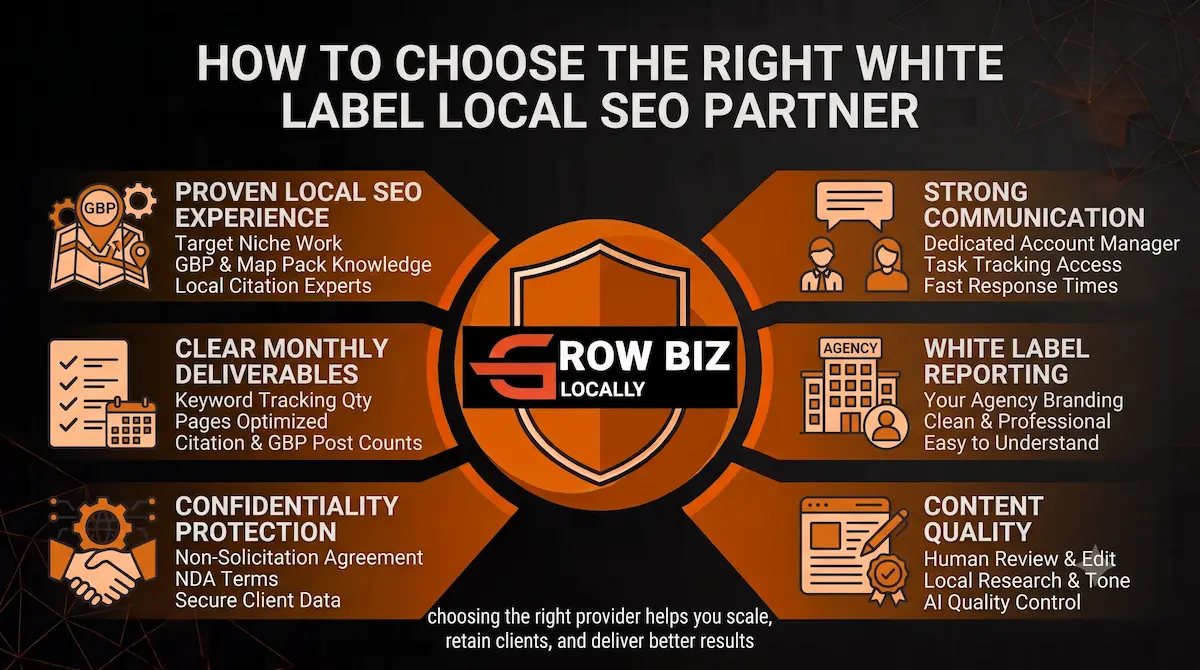
Choosing the right provider is critical.
The wrong partner can damage your reputation. The right partner can help you scale, retain clients, and deliver better results.
Before choosing a white label local SEO provider, look for these qualities.
1. Proven Local SEO Experience
Make sure the provider has real local SEO experience.
Local SEO is different from general SEO. Your partner should understand Google Business Profile, Map Pack rankings, local citations, reviews, service area businesses, location pages, and local ranking tracking.
Ask if they have worked with your target industries.
For example, home services, medical, dental, legal, med spa, and real estate SEO all have different challenges.
2. Clear Monthly Deliverables
You should know exactly what work is included.
Ask questions such as:
- How many citations are included?
- How many pages will be optimized?
- Are GBP posts included?
- Is content included?
- Are technical fixes included?
- How often are reports delivered?
- How many keywords are tracked?
- Is competitor tracking included?
Clear deliverables prevent confusion and protect your agency.
3. Strong Communication
A good white label partner should communicate clearly and consistently.
Ask who your account manager will be, how updates are shared, how tasks are tracked, and how quickly they respond.
If communication is poor during the sales process, it will probably be worse after you become a client.
4. White Label Reporting
Your provider should offer reports that can be presented under your agency brand.
Reports should be clean, professional, and easy for business owners to understand.
Avoid providers that send confusing reports filled with technical jargon and no explanation.
5. Content Quality
Content quality matters.
Ask how content is written, edited, and reviewed.
AI-assisted content can be useful, but it should not be published without human review, local research, and quality control.
Your clients need content that sounds natural, answers real questions, and supports their services.
6. Confidentiality Protection
Your clients are your clients.
Make sure your provider agrees not to contact, solicit, or work directly with your clients without permission.
Use clear agreements, NDAs, and non-solicitation terms where appropriate.
7. Case Studies or Performance Proof
Ask for examples of previous results.
This may include ranking improvements, Google Maps growth, organic traffic increases, GBP performance improvements, or local grid ranking examples.
A good provider should be able to show proof of experience without exposing confidential client information.
Common Mistakes Agencies Should Avoid
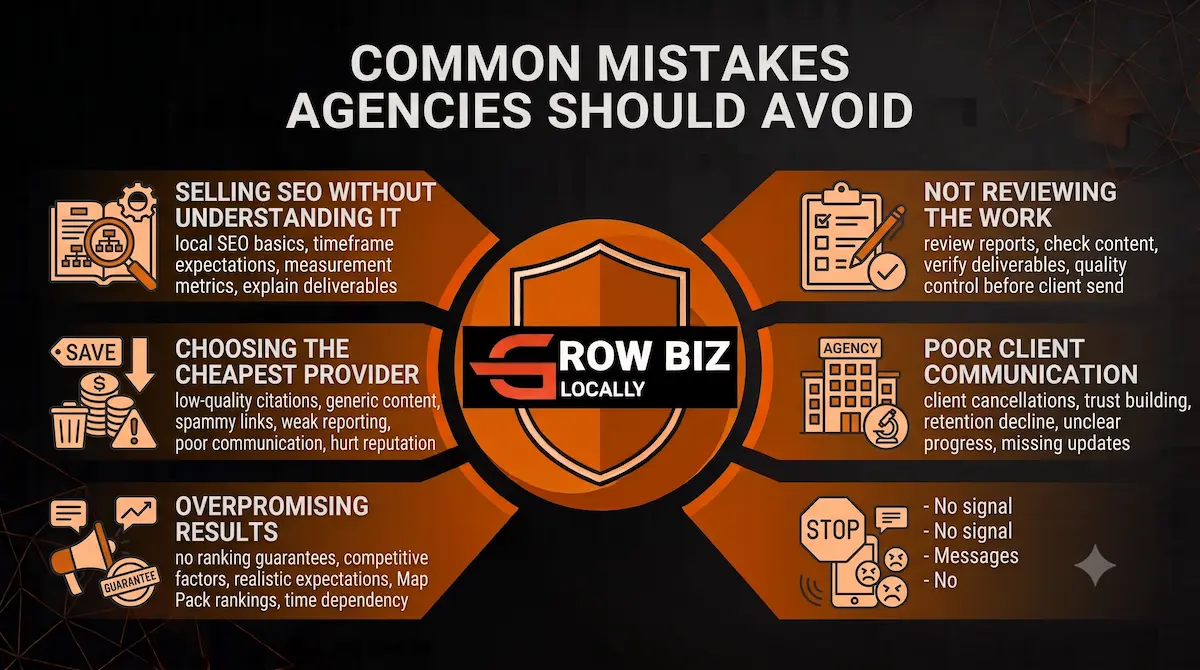
White label local SEO can be very profitable, but only if you manage it properly.
Avoid these mistakes.
Mistake 1: Selling SEO Without Understanding It
Even if you outsource the work, you still need to understand the basics.
You should be able to explain what local SEO is, why it takes time, what deliverables are included, and how success is measured.
Mistake 2: Choosing the Cheapest Provider
Cheap SEO often leads to poor results.
Low-quality citations, generic content, spammy links, weak reporting, and poor communication can hurt your agency’s reputation.
Choose a reliable partner, not just the lowest price.
Mistake 3: Overpromising Results
Do not guarantee first-page rankings or Map Pack rankings in a specific timeframe.
Local SEO depends on competition, location, proximity, reviews, website authority, content, citations, and many other factors.
Set realistic expectations from the beginning.
Mistake 4: Not Reviewing the Work
Your agency should review reports, content, and deliverables before sending them to clients.
Even with a good provider, quality control matters.
Mistake 5: Poor Client Communication
Clients may cancel if they do not understand what is happening.
Monthly updates, progress reports, and clear next steps help build trust and improve retention.
How to Start Offering White Label Local SEO
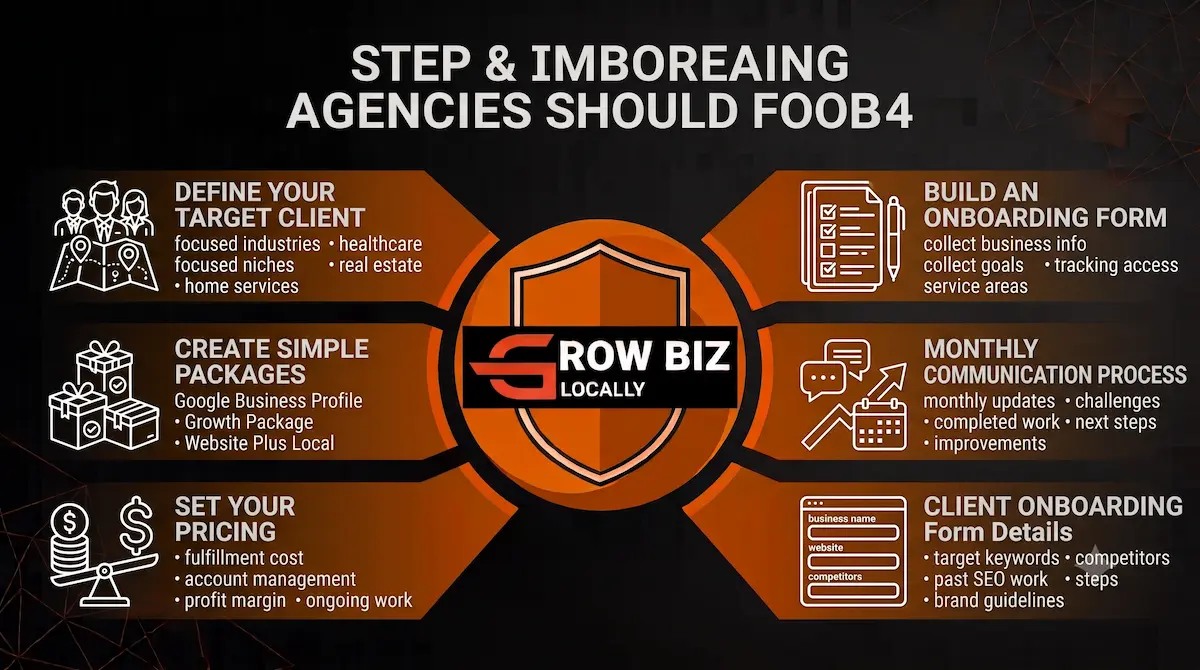
If your agency wants to start selling white label local SEO, follow this process.
Step 1: Define Your Target Client
Decide which industries you want to serve.
You may focus on home services, healthcare, dental, legal, real estate, med spas, or general local businesses.
The more focused your niche, the stronger your offer becomes.
Step 2: Create Simple Packages
Build packages that are easy to understand.
For example:
Starter Local SEO Google Business Profile Optimization Local SEO Growth Package Multi-Location SEO Website Plus Local SEO
Each package should explain what is included and what the client can expect.
Step 3: Set Your Pricing
Price the service based on fulfillment cost, account management time, reporting, communication, software, and profit margin.
Do not price too low.
Local SEO requires ongoing work, and your agency needs enough margin to manage the client properly.
Step 4: Build an Onboarding Form
Collect important information from the client, including:
- Business name
- Website URL
- Google Business Profile access
- Services
- Service areas
- Target locations
- Target keywords
- Competitors
- Photos
- Brand guidelines
- Past SEO work
- Main goals
- Tracking access
Good onboarding makes the campaign smoother.
Step 5: Create a Monthly Communication Process
Do not just send a report and disappear.
Create a monthly update process that explains:
- What was completed
- What improved
- What is being monitored
- What challenges exist
- What will be done next
This helps clients feel confident and informed.
Is White Label Local SEO Right for Your Agency?
White label local SEO is a strong fit if:
- Your clients are asking for SEO
- You build websites for local businesses
- You want recurring monthly revenue
- You do not want to hire a full SEO team
- You want to scale fulfillment
- You want to keep clients longer
- You want to offer more value under your own brand
It may not be right if you want to control every small task yourself or if you are not ready to manage client communication.
White label SEO works best when your agency is strong at relationships and sales, and your fulfillment partner is strong at execution.
Final Thoughts
White label local SEO is one of the most practical ways for agencies to grow.
It allows your agency to offer high-demand local SEO services without hiring a full in-house team. You can serve more clients, increase recurring revenue, improve retention, and provide a more complete marketing solution.
Your clients need visibility. They need Google Maps rankings. They need more calls, more leads, and more local search presence.
With the right white label local SEO partner, your agency can deliver those services under your own brand while keeping fulfillment simple and scalable.
If your agency wants to offer local SEO but does not want to manage the backend work, white label local SEO can be the right growth model.
Need a White Label Local SEO Partner for Your Agency?
If your agency serves local businesses and needs a reliable backend team for local SEO fulfillment, we can help.
We work behind the scenes as your white label local SEO team, helping agencies deliver Google Business Profile optimization, local SEO audits, citation building, service page optimization, location page strategy, reporting, and ongoing local SEO execution.
You keep the client relationship.
We handle the backend SEO work.
Whether you are a web design agency, marketing agency, PPC agency, social media agency, or consultant, we can help you add local SEO to your services without hiring an in-house team.
Contact us today to discuss how white label local SEO fulfillment can help your agency scale.